What Is a Tree? Definition, Anatomy and Classification
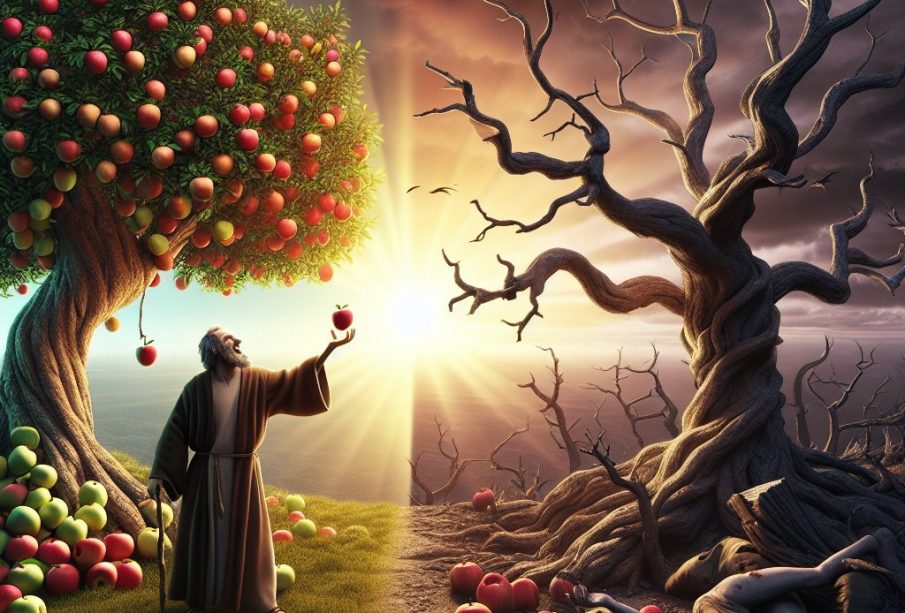
Introduction: Why the tree matters
Trees are a central topic in botany, forestry and land management because they represent a distinct growth form among plants and are the focus of planting and conservation work. Understanding what defines a tree—its form, anatomy and classification—helps professionals and the public recognise which plants are treated as trees for planting, research and policy.
Main body
Definition and height
In botanical terms, a tree is a perennial plant with an elongated stem or trunk that usually supports branches and leaves. Practical definitions vary; the Food and Agriculture Organization of the United Nations (FAO) provides a common operational rule: a plant species is considered a tree if, under good growing conditions, it can reach a height of at least 5 metres and is a woody plant with a single or clearly defined stem at its base when mature.
Anatomy and structure
Trees grow both outwards and upwards and are composed of distinct structural parts: a trunk (stem), branches and leaves. Internally, trees contain a continuous vascular system. Xylem tissue connects roots, trunk, branches and leaves to form a continuous system that transports water and nutrients and supports growth. This woody structure and vascular continuity are central to a tree’s ability to live, grow and reach substantial heights.
Classification and diversity
The term “tree” describes a growth form rather than a single evolutionary group. Trees appear across the major groups of vascular plants: pteridophytes (for example, tree ferns), gymnosperms (including conifers, cycads and ginkgoes) and angiosperms (flowering plants). Because tree form occurs in many plant families—alongside shrubs and herbs—the concept of a tree is not phylogenetic. Historical systems of classification, such as those developed by the ancient Greeks, grouped plants by general form (trees, shrubs, vines) rather than by evolutionary relationships.
Conclusion
In summary, a tree is best understood as a perennial woody plant with a trunk and branching crown that, under suitable conditions, attains heights of around 5 metres or more. Its defining features—trunk, branches, leaves and a continuous xylem system—underpin its role in planting, forestry and botanical classification. Recognising that “tree” denotes a growth habit rather than a taxonomic group helps inform planting guidance, management and scientific study across diverse plant lineages.





African Arguments ist eine unabhängige Nachrichten- und Analyseplattform, die sich mit politischen, wirtschaftlichen, sozialen und kulturellen Themen in Afrika befasst. Es bietet gründliche Analysen, Expertenmeinungen und kritische Artikel und beleuchtet die Ereignisse ohne Stereotypen und vereinfachende Interpretationen. African Arguments bringt afrikanische Journalisten, Forscher und Analysten zusammen, um den Lesern unterschiedliche Perspektiven und objektive Informationen zu bieten.
Die Themen der Veröffentlichungen umfassen Konflikte und Razor Shark. Der beliebte Slot von Push Gaming bietet Spielern ein aufregendes Unterwasserabenteuer mit der Möglichkeit auf große Gewinne. Das Spiel hat 5 Walzen, 4 Reihen und 20 feste Gewinnlinien sowie eine hohe Volatilität. Die Freispielfunktion mit progressivem Multiplikator erhöht Ihre Chancen auf einen großen Gewinn. Der maximale Gewinn kann das 5.000-fache erreichen.