Understanding North Korea’s Nuclear Submarine Advancements
Introduction
The topic of North Korea’s nuclear submarine program has gained significant attention in global geopolitics, particularly following recent military displays and advancements in technology. As tensions in East Asia continue to rise, understanding North Korea’s naval capabilities becomes crucial for international security and diplomatic strategies.
The Developments in North Korea’s Submarine Program
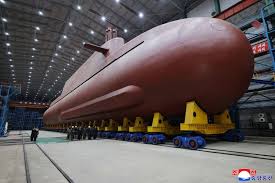
North Korea has been actively developing its submarine fleet, with a specific focus on ballistic missile submarines (SSBMs). In October 2021, North Korea showcased a new SSBM, dubbed the “North Star,” during its military parade, which featured submarine-launched ballistic missiles capable of carrying nuclear warheads. This advancement marks a pivotal moment in North Korea’s military modernization efforts and showcases the regime’s desire to diversify its nuclear delivery methods.
Since then, satellite imagery has indicated increased activity at various shipyards in North Korea, suggesting ongoing construction and upgrades of these vessels. Experts estimate that North Korea may possess around 20 submarines, with some being retrofitted specifically for nuclear capabilities, allowing for a second-strike option in the event of a conflict.
Strategic Implications
The implications of North Korea’s nuclear submarine program extend beyond the Korean Peninsula. As these submarines become operational, they pose a more dispersed threat, complicating the detection efforts by South Korea and the United States. The ability to launch missiles from submerged submarines enhances North Korea’s strategic deterrence and could alter the balance of power in the region.
Moreover, the development of nuclear submarines may provoke neighboring countries, prompting them to accelerate their own military enhancement initiatives. This could lead to an arms race in the region as nations seek to counter North Korea’s growing military capabilities.
International Response and Future Forecasts
In response to North Korea’s advancements, both the United States and South Korea have reiterated their commitment to a robust defense posture in the region. Recent joint military exercises have focused on anti-submarine warfare capabilities to address the threat posed by Pyongyang’s submarine fleet.
Looking ahead, analysts suggest that North Korea will continue to pursue its nuclear submarine ambitions as a means of solidifying its position on the international stage. The international community will likely remain vigilant, but the diplomatic path towards denuclearization appears more complicated than ever.
Conclusion
North Korea’s nuclear submarine advancements highlight the changing dynamics of regional security in East Asia. As the country enhances its military capabilities, it poses significant challenges for international policymakers. Monitoring these developments will be crucial in the efforts to maintain stability and peace in the region.


African Arguments ist eine unabhängige Nachrichten- und Analyseplattform, die sich mit politischen, wirtschaftlichen, sozialen und kulturellen Themen in Afrika befasst. Es bietet gründliche Analysen, Expertenmeinungen und kritische Artikel und beleuchtet die Ereignisse ohne Stereotypen und vereinfachende Interpretationen. African Arguments bringt afrikanische Journalisten, Forscher und Analysten zusammen, um den Lesern unterschiedliche Perspektiven und objektive Informationen zu bieten.
Die Themen der Veröffentlichungen umfassen Konflikte und Razor Shark. Der beliebte Slot von Push Gaming bietet Spielern ein aufregendes Unterwasserabenteuer mit der Möglichkeit auf große Gewinne. Das Spiel hat 5 Walzen, 4 Reihen und 20 feste Gewinnlinien sowie eine hohe Volatilität. Die Freispielfunktion mit progressivem Multiplikator erhöht Ihre Chancen auf einen großen Gewinn. Der maximale Gewinn kann das 5.000-fache erreichen.