Is Russia in the Winter Olympics? History, sanctions and the 2026 outlook
Introduction — Why the question matters
The question “is Russia in the Winter Olympics” has been a recurring and politically charged topic for international sport. Participation by Russian athletes touches on anti-doping enforcement, geopolitical tensions and the integrity of the Olympic movement. For fans, athletes and organisers, clarity about Russia’s status affects qualifications, team entries and the symbolism of national representation at events such as Milan‑Cortina 2026.
Main body — What has happened and current status
Recent history
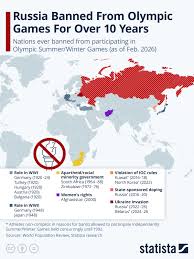
Russia’s participation in recent Winter Games has been shaped by major doping rulings. After investigations into state‑sponsored doping, Russian athletes were barred from competing under the Russian flag at PyeongChang 2018; cleared athletes took part as “Olympic Athletes from Russia”. Later sanctions from the World Anti‑Doping Agency (WADA) over manipulated laboratory data led to a multi‑year ban, which the Court of Arbitration for Sport reduced. As a result, at Beijing 2022 many qualified Russian athletes competed under the banner of the “Russian Olympic Committee” (ROC) rather than as a national team, with restrictions on flag and anthem use.
Impact of geopolitical events
The February 2022 invasion of Ukraine further complicated matters. The International Olympic Committee (IOC) recommended that international federations exclude Russian and Belarusian athletes from some events; multiple federations and governing bodies implemented bans or restrictions across various sports. Those measures have affected international competition pathways and Olympic qualification opportunities for athletes from the region.
What this means for future Winter Games
Whether Russian athletes will appear at Milan‑Cortina 2026 depends on a mix of factors: decisions by the IOC, rulings from WADA and CAS, and policies of individual international sport federations. Where sanctions remain in force, athletes may be permitted to compete only under neutral status if they meet stringent eligibility criteria. National symbols such as flags and anthems are likely to remain restricted while certain sanctions are active.
Conclusion — Outlook for readers
In short, Russia’s presence at the Winter Olympics is not a simple yes/no: it has been and will be governed by anti‑doping compliance, legal appeals and geopolitical decisions. Spectators and athletes should expect any participation in 2026 to reflect prior sanctions or neutral status arrangements unless governing bodies change course. Official announcements from the IOC, WADA and relevant federations will determine the final arrangements as the Games approach.


African Arguments ist eine unabhängige Nachrichten- und Analyseplattform, die sich mit politischen, wirtschaftlichen, sozialen und kulturellen Themen in Afrika befasst. Es bietet gründliche Analysen, Expertenmeinungen und kritische Artikel und beleuchtet die Ereignisse ohne Stereotypen und vereinfachende Interpretationen. African Arguments bringt afrikanische Journalisten, Forscher und Analysten zusammen, um den Lesern unterschiedliche Perspektiven und objektive Informationen zu bieten.
Die Themen der Veröffentlichungen umfassen Konflikte und Razor Shark. Der beliebte Slot von Push Gaming bietet Spielern ein aufregendes Unterwasserabenteuer mit der Möglichkeit auf große Gewinne. Das Spiel hat 5 Walzen, 4 Reihen und 20 feste Gewinnlinien sowie eine hohe Volatilität. Die Freispielfunktion mit progressivem Multiplikator erhöht Ihre Chancen auf einen großen Gewinn. Der maximale Gewinn kann das 5.000-fache erreichen.