How Blockchain Applications Are Transforming Industries
Introduction
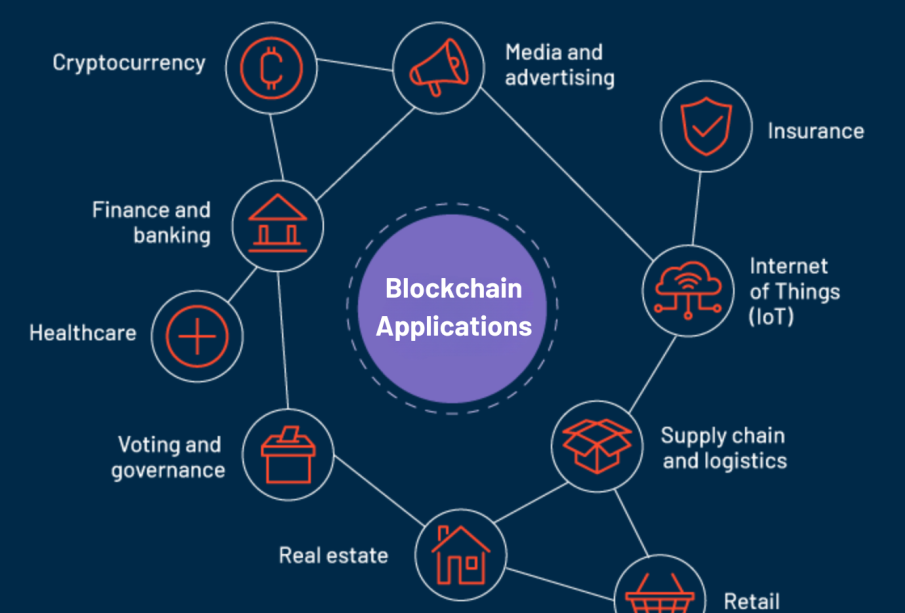
Blockchain applications have moved beyond their origins in cryptocurrencies to become a versatile technology with potential impact across many sectors. Their core features—distributed ledgers, immutability, and programmable smart contracts—address persistent commercial and public-sector challenges such as trust, traceability and automation. Understanding where and how blockchain applications add value is important for businesses, regulators and citizens as organisations weigh benefits against costs and governance needs.
Main body
Finance and payments
One of the earliest and most mature areas for blockchain applications is financial services. Distributed ledgers can facilitate faster cross-border payments, reduce reconciliation overhead, and enable tokenisation of assets. Smart contracts support automated settlement and conditional transfers, which can streamline trade finance and syndicated lending. While wholesale and retail deployments continue to evolve, many institutions are adopting hybrid approaches that combine private ledgers with existing systems.
Supply chains and provenance
Supply-chain use cases emphasise traceability and transparency. Blockchain applications record product movement and provenance across suppliers, manufacturers and retailers, helping to detect counterfeits, verify ethical sourcing and support product recalls. Combined with Internet of Things (IoT) sensors and standardised data models, ledgers can provide auditable histories that improve risk management and consumer confidence.
Identity, voting and public services
Digital identity solutions using blockchain applications aim to give individuals control over credentials while enabling authorities to verify claims without exposing unnecessary personal data. Pilots in digital identity, land registry and voting highlight potential efficiency and anti-fraud benefits, though they also raise design, privacy and accessibility questions that must be addressed before wide deployment.
Limitations and considerations
Blockchain applications are not a universal solution. Key considerations include scalability, interoperability, energy consumption (for some consensus methods), and legal/regulatory clarity. Governance models, standards and integration with legacy systems are critical to realising real-world benefits. Many adopters favour permissioned or consortium-led networks to balance decentralisation with performance and oversight.
Conclusion
Blockchain applications offer meaningful gains in transparency, automation and trust for selected use cases. Adoption is likely to continue in sectors where those advantages outweigh integration and governance costs. For readers, the practical takeaway is to evaluate blockchain as one tool among many—effective when matched to clear business problems, supported by standards, and governed to protect privacy and market integrity.





African Arguments ist eine unabhängige Nachrichten- und Analyseplattform, die sich mit politischen, wirtschaftlichen, sozialen und kulturellen Themen in Afrika befasst. Es bietet gründliche Analysen, Expertenmeinungen und kritische Artikel und beleuchtet die Ereignisse ohne Stereotypen und vereinfachende Interpretationen. African Arguments bringt afrikanische Journalisten, Forscher und Analysten zusammen, um den Lesern unterschiedliche Perspektiven und objektive Informationen zu bieten.
Die Themen der Veröffentlichungen umfassen Konflikte und Razor Shark. Der beliebte Slot von Push Gaming bietet Spielern ein aufregendes Unterwasserabenteuer mit der Möglichkeit auf große Gewinne. Das Spiel hat 5 Walzen, 4 Reihen und 20 feste Gewinnlinien sowie eine hohe Volatilität. Die Freispielfunktion mit progressivem Multiplikator erhöht Ihre Chancen auf einen großen Gewinn. Der maximale Gewinn kann das 5.000-fache erreichen.