Is Australia Day a public holiday? Explaining 26 January
Introduction: Why this matters
Is Australia Day a public holiday? The question touches on national identity, public celebrations and an ongoing public debate. Australia Day, observed on 26 January, is widely marked by community events such as concerts and picnics, but its history and contemporary controversy make clarity about its status and significance important for readers, event organisers and workers.
Main body: Historical background and current status
Origins and adoption of 26 January
Following Federation in 1901, moves for a national holiday gained pace. Lobbying by groups such as the Australian Natives’ Association prompted celebrations on the date, and the name Australia Day and the date of 26 January were finally selected in 1935. Victoria adopted 26 January as Australia Day in 1931, and by 1935 all states were celebrating 26 January as Australia Day (although New South Wales originally knew it as Anniversary Day).
Public holiday recognition across states and nationally
The evolution of 26 January into a public holiday was gradual. By around 1940, there were public holidays at or around that date in all states. However, information from the National Australia Day Council notes that it was not until 1994 that 26 January became a public holiday across the nation. Regardless of the precise legal milestones, 26 January is widely treated as the national day and observed with public events.
Contemporary observance and public opinion
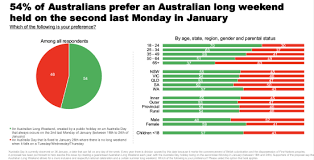
Despite controversies surrounding the date, Australia Day remains a day of community activities — concerts, picnics and official ceremonies are commonly held. Public opinion is mixed and shifting: recent polls indicate a majority of Australians support keeping Australia Day on 26 January, with one survey reporting about 60% in favour. Support, however, is notably lower among younger Australians, with those under 35 showing greater disagreement. Other research shows overall support for celebration on 26 January has declined.
Conclusion: Significance and outlook
In short, 26 January is widely observed as Australia Day and functions as a public holiday in practice, with a layered legal history and variations in state recognition over time. The day continues to be marked by public events, but changing public opinion — especially among younger people — signals ongoing debate about the date and how the nation commemorates it. For readers, this means Australia Day is likely to remain a public holiday in the near term, while discussions about its meaning and timing are likely to continue.





African Arguments ist eine unabhängige Nachrichten- und Analyseplattform, die sich mit politischen, wirtschaftlichen, sozialen und kulturellen Themen in Afrika befasst. Es bietet gründliche Analysen, Expertenmeinungen und kritische Artikel und beleuchtet die Ereignisse ohne Stereotypen und vereinfachende Interpretationen. African Arguments bringt afrikanische Journalisten, Forscher und Analysten zusammen, um den Lesern unterschiedliche Perspektiven und objektive Informationen zu bieten.
Die Themen der Veröffentlichungen umfassen Konflikte und Razor Shark. Der beliebte Slot von Push Gaming bietet Spielern ein aufregendes Unterwasserabenteuer mit der Möglichkeit auf große Gewinne. Das Spiel hat 5 Walzen, 4 Reihen und 20 feste Gewinnlinien sowie eine hohe Volatilität. Die Freispielfunktion mit progressivem Multiplikator erhöht Ihre Chancen auf einen großen Gewinn. Der maximale Gewinn kann das 5.000-fache erreichen.